Home / Cities and public spaces / Pothole detection
Pothole detection AI that gets road damage repaired inside the contract deadline.
Potholes are often reported by drivers after the damage is done. ZoneIntel AI runs pothole detection AI on your street cameras. Each day it compares a marked stretch of road with its last clear image, and a reviewer confirms each change.
Each defect has a repair deadline
Each type of damage maps to a repair class and a deadline in the road maintenance contract. A missed deadline leaves a hazard on a busy road.
| Damage | Repair class | Typical deadline set by the city |
|---|---|---|
| Pothole in a running lane | Urgent | 24 hours |
| Pothole on a cycle route or crossing | Urgent | 24 hours |
| Missing or broken drain cover | Urgent | Same day |
| Broken road edge or kerb | Planned | 7 days |
| Cracking and worn surface | Planned | Next resurfacing list |
| Faded lane markings | Planned | Next marking round |
Results
| Result | Pilot measure |
|---|---|
| Damage found before a complaint | Defects found on camera, against resident reports |
| Repairs on time | Repair orders closed inside the deadline, per contractor |
| Fewer inspection drives | Inspector trips per week, before and after |
Each damaged stretch has a repair order, a deadline and a photo of the patch. The contractor report shows which repairs ran late.
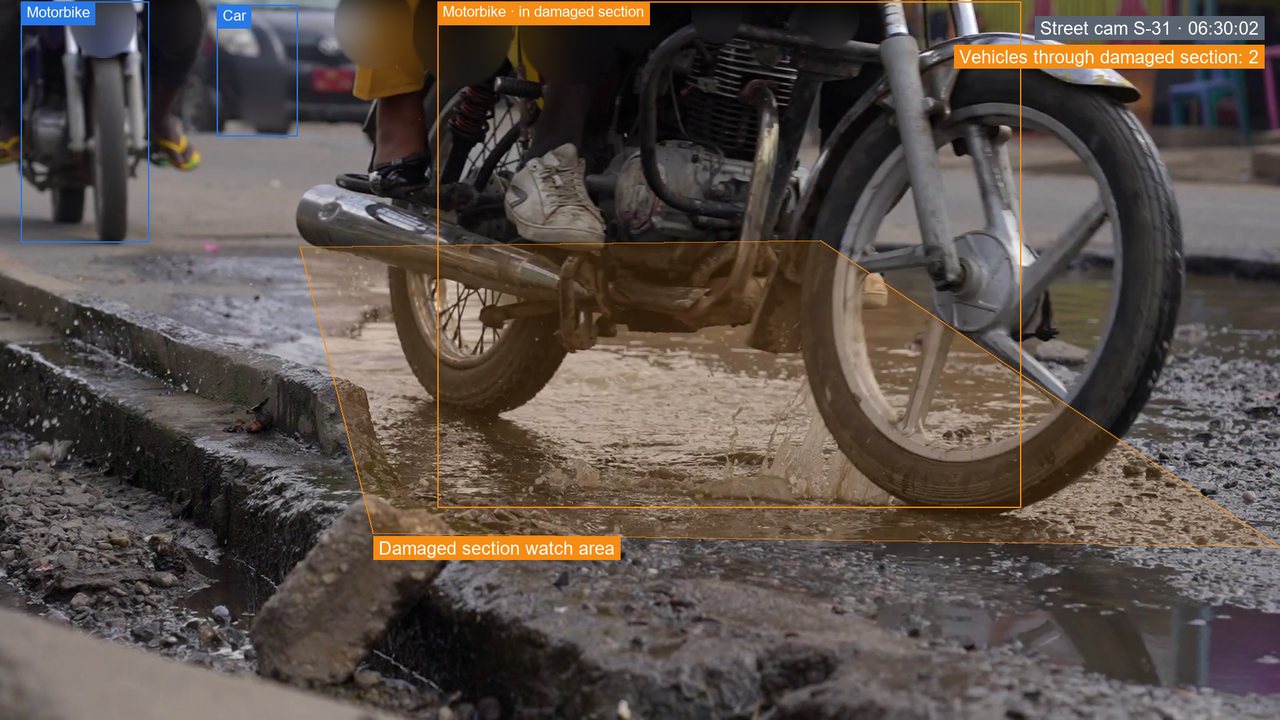
The marked section of the nearside lane at camera S-31 has changed since the last clear image, with water standing in a damaged patch.
How a repair order closes
The repair order stays open until the reviewer sees the surface patched on the same camera view. The times go into the contractor report.
- 06:30Damaged section found in the nearside lane at camera S-31.
- 06:31Repair order to the road contractor, 24-hour deadline.
- Day 1, 16:00Crew on site, seen on camera; lane coned off.
- Day 1, 19:20Patch confirmed by the reviewer on the same camera view, order closed.
Questions about pothole detection AI
How does pothole detection AI work?
Pothole detection AI compares images of the road surface over time to find damage. ZoneIntel marks a watch area over each stretch of road and checks it daily. A reviewer looks at each change and raises the repair order.
Can fixed cameras see road damage?
Fixed cameras see the stretch of road in their view. That covers junctions, bus stops and busy streets, where damage matters most. Cameras on vehicles can be added to survey the whole network.
How does ZoneIntel AI rank repairs?
The reviewer sets the repair class from lane position and traffic. A pothole in a running lane outranks a crack at the kerb. The city sets the deadline for each class.
Does it check that the repair was done?
ZoneIntel checks the same view after the repair deadline. The order closes when the reviewer sees the patch. A repeat failure at the same spot is flagged in the contractor report.
Does it work in rain?
Standing water can hide a pothole, so a wet watch area is checked again once the road is dry. Water that stays after rain is raised as a drainage case.
Related use cases
See also street asset inspection and vehicle camera inspection.
Road check on your own cameras
Share a day of footage from a few street cameras through a secure link. We send back the damage ZoneIntel AI would have raised, with photos.