Home / Cities and public spaces / Drain and flood monitoring
Drain and flood monitoring CCTV that finds blocked drains before roads flood.
Most blocked drains are found after the road floods. ZoneIntel AI runs drain and flood monitoring on the CCTV you already have. It sends the drainage crew to the right inlet and keeps the case open until the road is clear.
Blocked drains are usually found after the road floods
A grating choked with leaves and plastic looks harmless on a dry day. When the rain comes, it floods the road. Public flood reports arrive late and rarely name the inlet.
- Blocked gratings found only after a flood
- Flood reports from the public, hours late
- Crews sent without knowing which inlet
- No record of how long a road was under water
PUB in Singapore runs more than 500 CCTVs on its flood monitoring dashboard.
Source: PUB, Nov 2025PUB has asked industry for AI that inspects drains, through its Smart Drain Inspector challenge.
Source: PUB Global Innovation Challenge
How drain and flood monitoring works
Cameras that already look over drains, underpasses and low roads are enough to start. Contractors use the same checks for silt and drain compliance. The same cameras can also run pothole detection.
Watch points are set
Mark drains, inlets, underpasses and low roads on each camera. Draw a water line where you want an alert.
Water and blockages are found
ZoneIntel finds standing water, water over the line, debris on gratings and silt in channels. It raises a case only when they last longer than the time you set.
The crew is sent
A work order goes to the drainage team or contractor for that area. It carries the clip, the place and the deadline.
Road clear on camera
The same view is checked again. The case closes when the water is gone or the grating is clear, and the duration is logged.
Results
| Result | Pilot measure |
|---|---|
| Blockages cleared before the storm | Blocked gratings found and cleared before rain, per round. |
| The crew goes to the right inlet | Minutes from water on the road to a crew sent. |
| A flood record you can stand behind | Minutes each road was under water, before and after the pilot. |
Fewer roads flood from blocked inlets, and floods that do happen are shorter. The city also knows how long each road was under water.
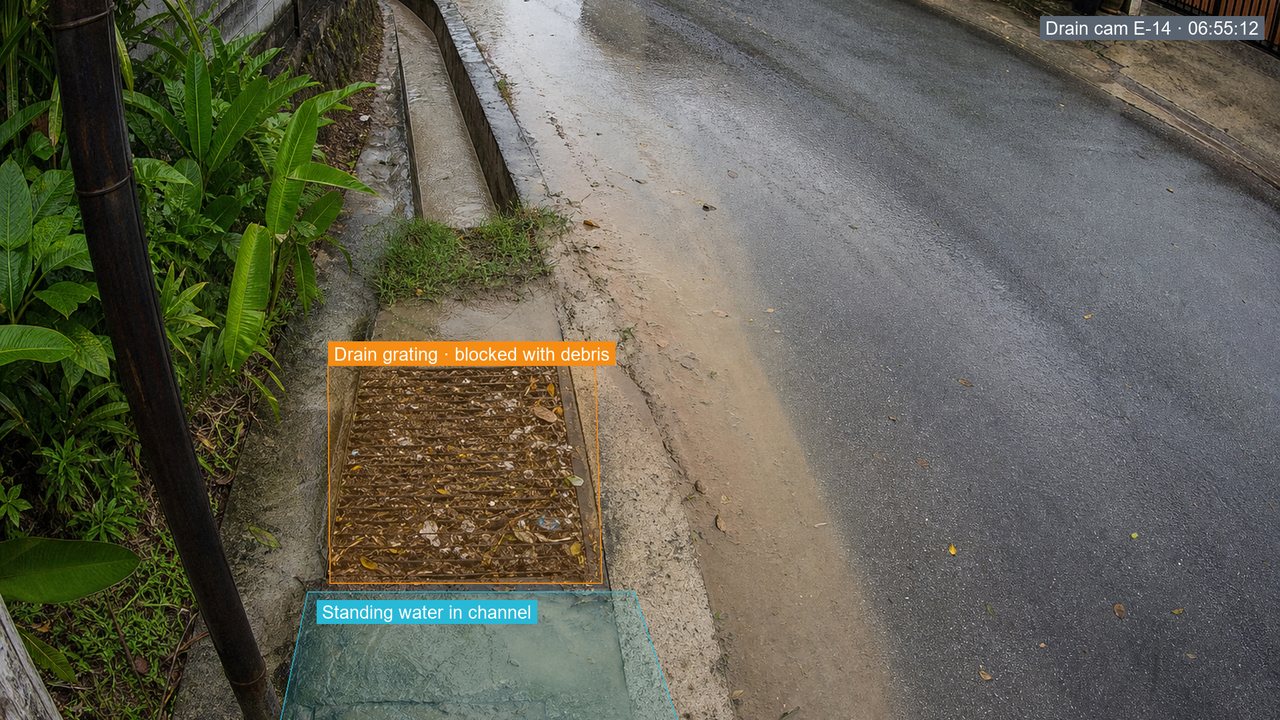
The grating at drain E-14 is blocked and water is pooling across the kerb.
Questions about drain and flood monitoring
Can CCTV detect flooding on roads?
CCTV can detect flooding on roads. ZoneIntel finds standing water and water above a line drawn on the camera view. It raises an alert only when the water stays longer than the set time.
Does a drain camera replace water level sensors?
A drain camera works alongside water level sensors. A sensor gives a level at one point. The camera shows the road, the grating and the vehicles in the water, and sensor readings can join the same case.
Can it spot blocked drains before it rains?
Scheduled camera checks look at gratings and channels for debris and silt. Each blockage becomes a work order before the next storm.
Can it watch drain outlets next to construction sites?
Where a camera sees a drain outlet beside a site, ZoneIntel checks for silty water and debris. The case goes to the contractor responsible.
Does it work at night and in heavy rain?
It works at night and in rain where the camera can see the road. Rain on the lens and very dark views limit any camera, so the footage review checks each view first.
Drain review on your own cameras
Share footage from a few drain cameras across one rainy day. We send back the blockages and standing water ZoneIntel would have raised, with times.