Home / Cities and public spaces / Visual pollution detection
Visual pollution detection AI that gets each case closed inside its deadline.
Visual pollution cases mostly come from inspectors and residents, and each closure needs another visit. ZoneIntel AI runs visual pollution detection on the cameras a city already has. It sends each case to its owner and checks the fix on camera.
Visual pollution programmes
The visual pollution Saudi Arabia tracks as a quality-of-life measure still reaches cities mostly through inspectors and residents. Each fix is checked by another visit.
In Saudi Arabia, SDAIA launched the SmartC visual pollution platform with the municipal ministry.
Source: MubasherSaudi Arabia’s municipal ministry ran the Smartathon Smart Cities Challenge with partners including SDAIA, to detect and reduce visual pollution.
Source: SDAIA release, Dec 2022
Categories and owners
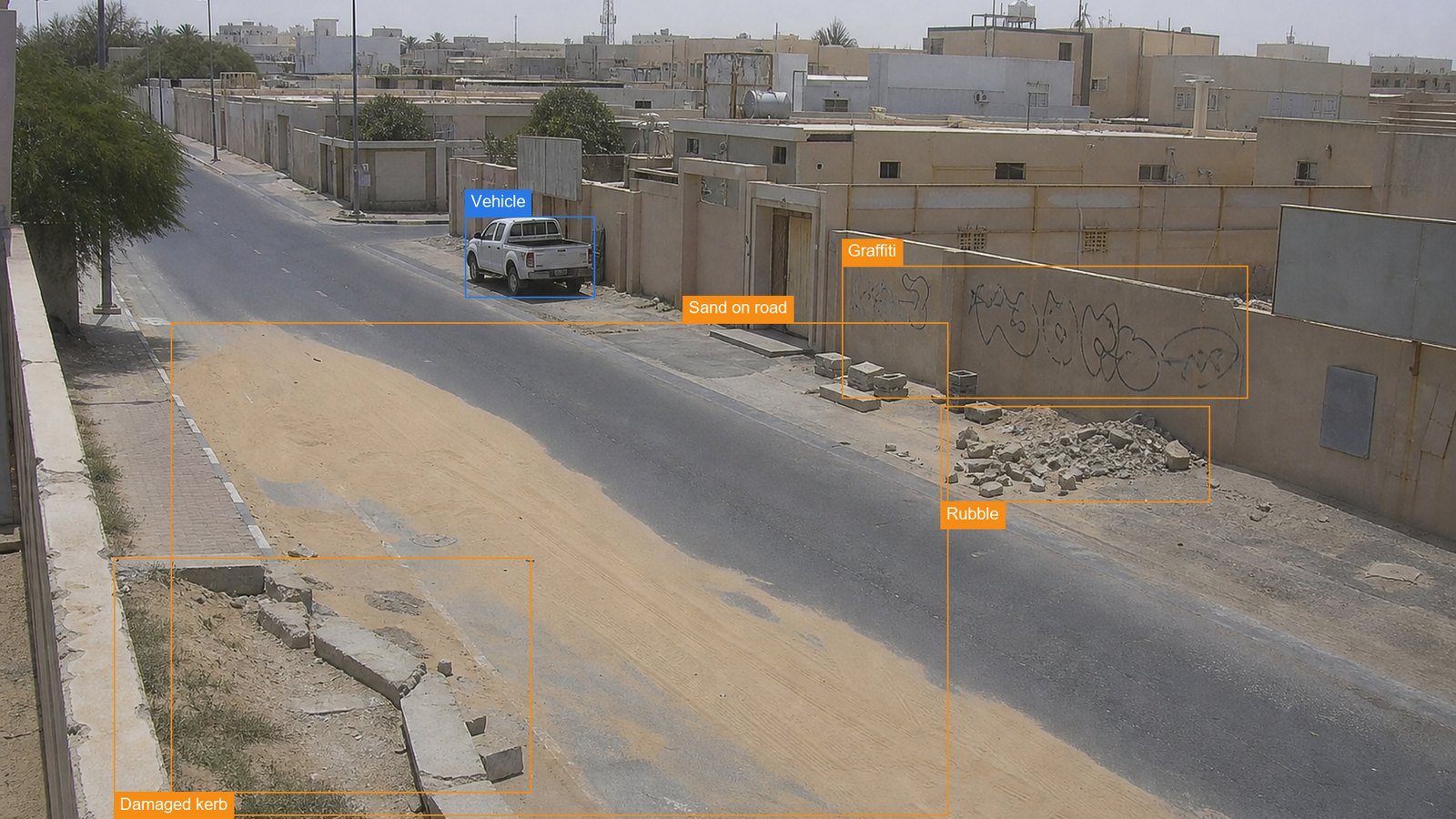
The list follows the types of case the city reports on. Each type has an owner and a deadline.
| Category | Example | Usual owner |
|---|---|---|
| Graffiti and fly-posting | Paint and posters on walls and fences | Cleaning contractor |
| Debris and building waste | Rubble, sand piles and dumped materials | Waste contractor |
| Damaged street assets | Broken signs, lights, barriers and benches | Public works |
| Abandoned vehicles | A vehicle unmoved on the street for days | Traffic department |
| Unsafe or unfinished sites | Open sites without hoarding, fallen fencing | Building control |
| Damaged pavements | Broken paving, missing kerbs | Road maintenance |
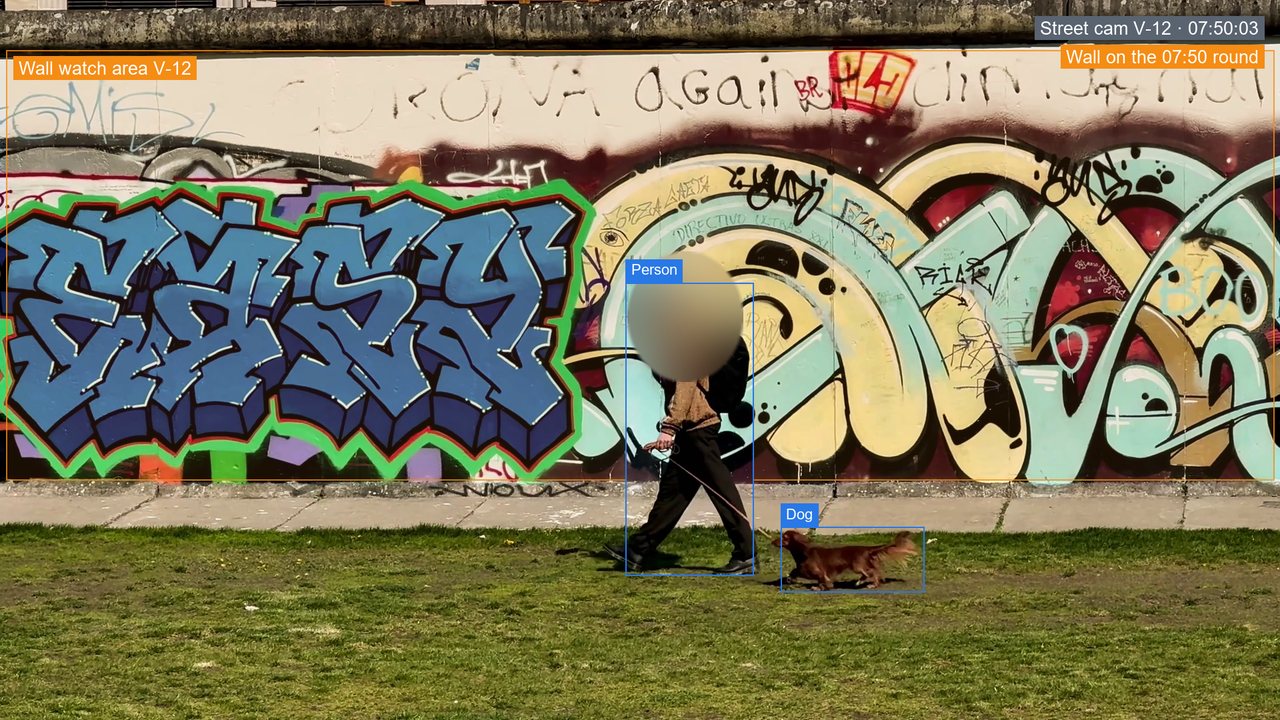
New graffiti has appeared on the wall at camera V-12 since the last clear check.
Results
| Result | Pilot measure |
|---|---|
| Cases found before an inspector visit | Cases raised on camera, by category |
| Cases closed inside the deadline | Days to close, per department and contractor |
| Fewer field trips to confirm closure | Closures confirmed on camera |
Each case is tracked against its 24 to 72 hour deadline and closed with a photo of the fix. Inspectors visit only when the camera cannot confirm the fix.
How a case closes
A case closes when the reviewer sees the wall clean or the sign repaired on the same camera view. The record then goes to the city’s own platform.
- 07:50New graffiti on the wall at camera V-12.
- 07:51Case to the district cleaning contractor, 72-hour deadline.
- Day 2, 10:00Reminder sent; crew booked.
- Day 2, 15:30Wall clean on the same camera view, case closed by the reviewer.
Questions about visual pollution detection
What is visual pollution detection?
Visual pollution detection finds things that spoil how a street looks, such as graffiti, debris, damaged signs and abandoned vehicles. ZoneIntel checks marked areas on existing cameras for changes. Each confirmed case goes to the team responsible.
Does ZoneIntel AI follow the Saudi visual pollution categories?
ZoneIntel matches its case types to the list the Amanah uses. Each case carries the code the city already reports against. The list is agreed during the pilot.
Can it work with national municipal platforms?
ZoneIntel sends cases to the platform the city uses, through the integrator who runs it. Cases keep their photos and times, and status updates come back.
Is the data kept in Saudi Arabia?
ZoneIntel runs on servers in the city's data centre or a partner's cloud in the Kingdom. Video and case data stay in the Kingdom under the Personal Data Protection Law.
Is there an Arabic version?
The dashboard and reports are available in Arabic and English. This website and the demo are in English.
Related use cases
See also graffiti detection, street asset inspection and vehicle camera inspection.
Visual pollution review on your own cameras
Integrators bring one district’s cameras and see the case list by category within two weeks. Cities can also ask for a sample case report.