Reduce false alarms on CCTV so officers go only to real ones.
Wind, animals and headlights set off most perimeter alarms, and each one costs an officer trip. ZoneIntel AI checks every alarm on camera first and logs why it dismissed each one.
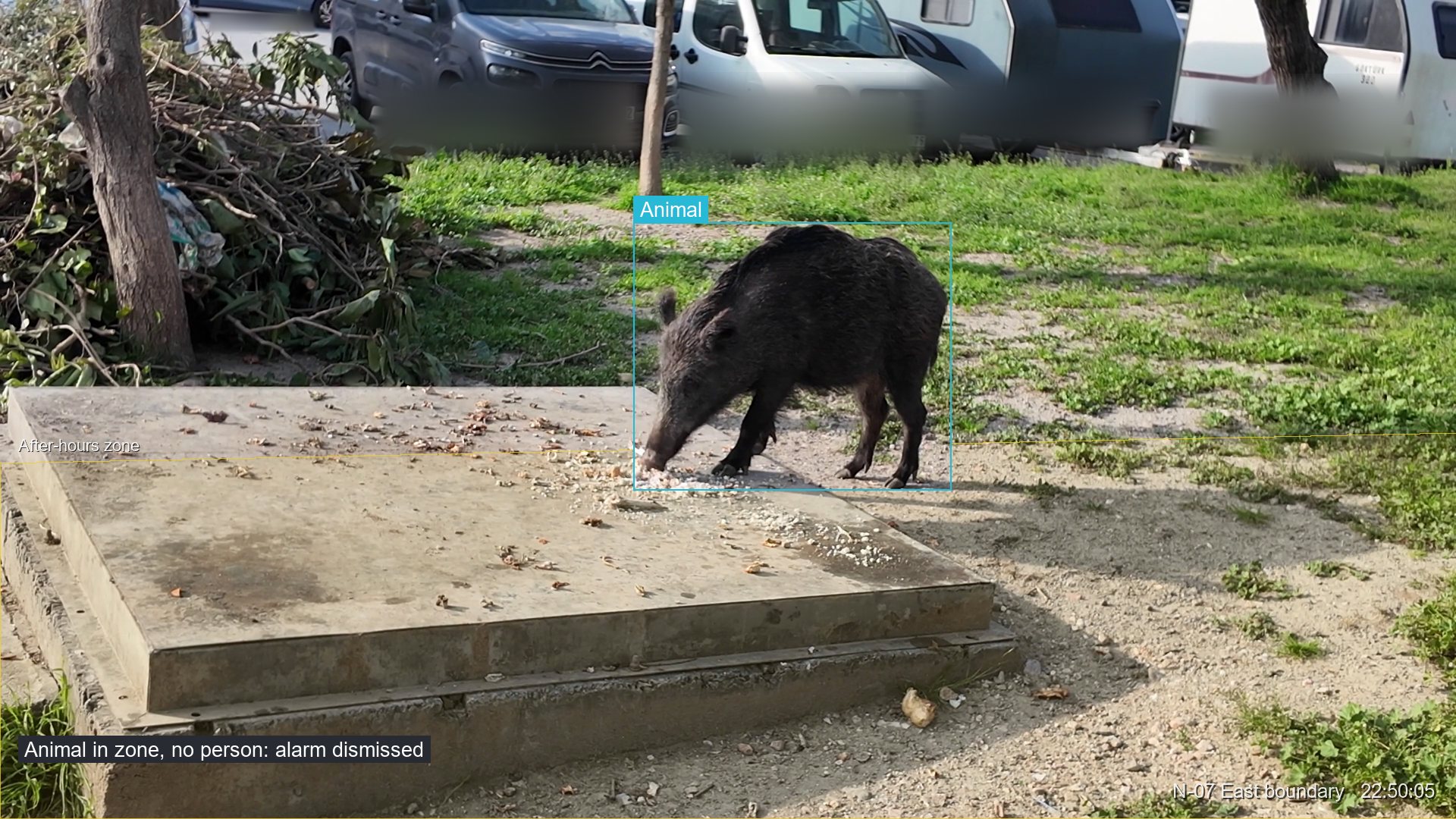
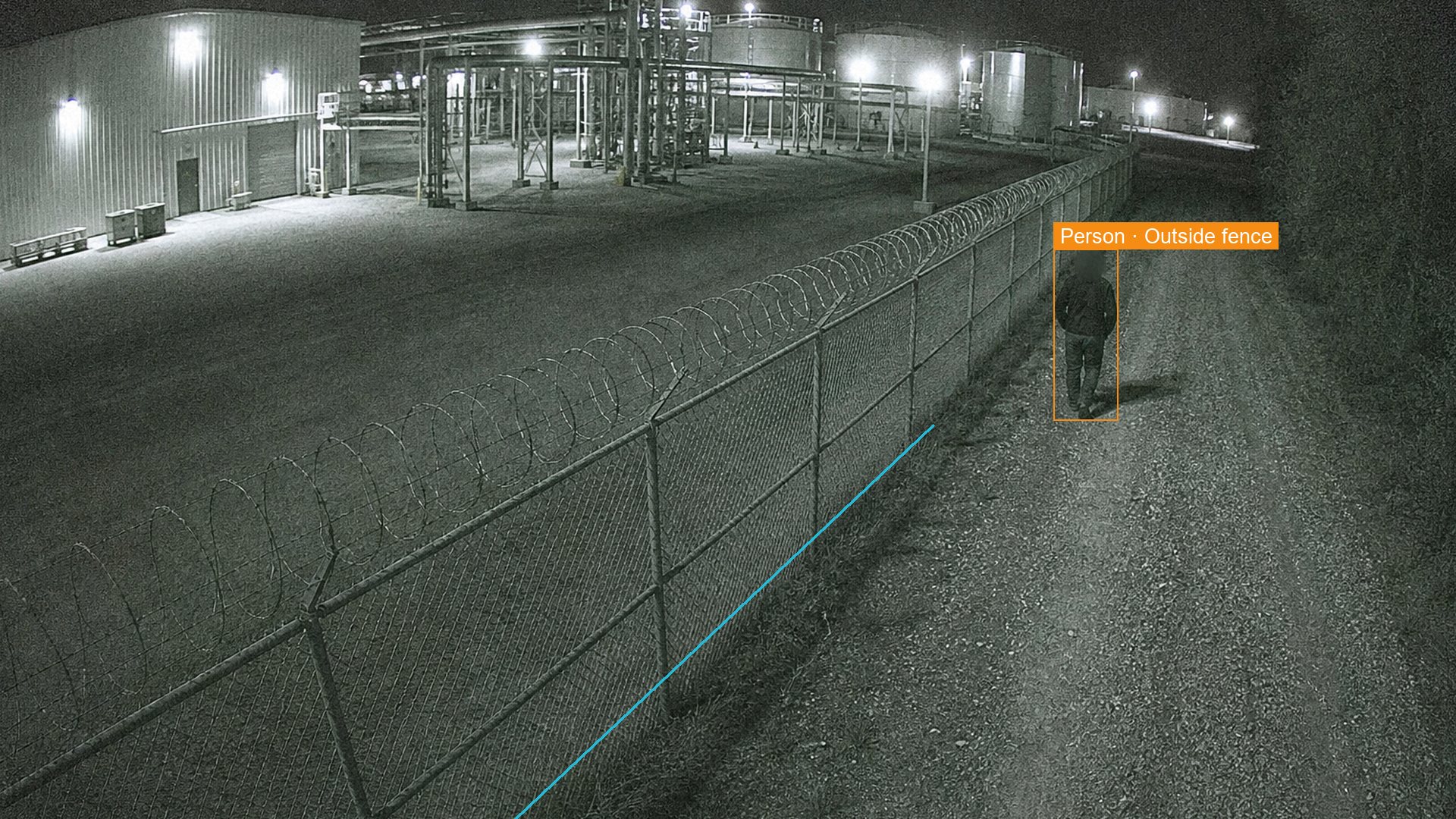
A fence alarm on camera N-07 was confirmed as one person, after four earlier alarms on that camera were dismissed as wind.
Alerts arrive in under 10 seconds by app, SMS, Teams, email or your video system. Simulation.
Why perimeter alarms are false
Motion rules and fence sensors react to any movement. A branch in the wind raises the same alarm as an intruder.
US police research found that 94 to 98 percent of the alarm calls police attend are false. Source: ASU Center for Problem-Oriented Policing, False Burglar Alarms, 2007
| Cause | What the sensor or motion rule sees | What ZoneIntel AI checks on camera |
|---|---|---|
| Wind and rain | Fence fabric, branches and rain streaks moving in the zone | No person or vehicle in the zone, so the alarm is dismissed with the reason |
| Animals | Dogs, monkeys and wild boar crossing the fence line | The animal is recognised and the alarm is closed with the clip |
| Headlights | Light sweeping across the yard from the road | Nothing in the scene is a person or a vehicle inside the fence |
| Your own crew | Night shift, cleaners and contractors walking the fence | Each person is matched to the work list by zone, time and permit |
| Insects and webs | Movement right in front of the lens | The blocked view is logged as a camera task for facilities |
How ZoneIntel helps reduce false alarms on CCTV
- 22:50:11
The alarm arrives
It comes from a fence sensor, an alarm panel or ZoneIntel’s own check of the camera feed.
- 22:50:12
The scene is checked
ZoneIntel checks whether a person or vehicle is really there and what they are doing.
- 22:50:13
The decision is recorded
A real alarm goes to the control room and the officer on duty. A false one is dismissed with its reason and clip.
- 23:01:40
The case closes on camera
A real alarm closes when the camera shows the officer at the spot and the area clear.
Results
Officers spend their nights on real alarms, and every dismissal keeps its clip for review. The pilot counts these on your own cameras.
- False call-outs per week
- Officer trips to alarms with nobody there, before and after.
- Alarms dismissed with a reason
- Wind, animals, headlights or your own crew, each with its clip.
- Time to officer on scene
- Minutes from the first frame of a real alarm to an officer at the spot.
- Alarms reopened on review
- Dismissed alarms your supervisor sent back after checking the clip.
Questions
What causes most false alarms on CCTV?
Most false alarms come from movement that is not a person or vehicle. Wind, branches, rain, insects, headlights, animals and your own crew all count. A motion rule treats each one as an intruder.
How does AI reduce false alarms on CCTV?
AI reduces false alarms by checking each alarm on camera before anyone is sent. ZoneIntel confirms a person or vehicle is there and reads the scene. It records a reason for every alarm it dismisses.
Will ZoneIntel AI dismiss a real intruder?
ZoneIntel passes on any alarm it cannot clear with a firm reason. Doubtful cases still reach the control room. Every dismissed alarm keeps its clip and reason for your supervisor.
Does it work with our alarm panel and fence sensors?
ZoneIntel takes alarms from alarm panels and fence sensors and checks each one on the nearest camera. Where no sensor is fitted, it raises its own alarms from the camera feed.
How do we measure the drop in false call-outs?
A pilot counts false call-outs per week, before and after, on the same cameras. The weekly report lists every alarm with its decision, reason and clip. Each count traces back to footage.
Send us one night of alarms and footage from your perimeter.
We show which alarms were real, which were dismissed and what caused each false one.