Home / Cities and public spaces / Smart city video analytics
Smart city video analytics that gets problems fixed before residents complain.
Most city problems are still found by patrol or by a complaint. ZoneIntel AI is AI video analytics for smart cities, on the cameras you already own. Each finding becomes a work order and closes when the camera shows it fixed.
City cameras are mostly reviewed after an incident
Cities run thousands of cameras, yet lanes, drains and road works are still checked by patrol. Where analytics exist, many alerts reach a screen that nobody owns.
- Footage pulled only after an incident
- Separate tools with separate alert screens
- Alerts with no owner and no follow-up
- No evidence for contractor performance reviews
In Saudi Arabia, SDAIA launched the SmartC visual pollution platform with the municipal ministry.
Source: Mubasher
How smart city video analytics works
ZoneIntel connects to the city’s video system and runs on servers the city controls. Cases go into the systems city teams already use. Common starting points are traffic incident detection, illegal dumping detection and crowd monitoring.
Connect the cameras
Cameras connect through the city’s video recorders to ZoneIntel servers in the city data centre or at the roadside.
Choose the checks
Pick from flooding, dumping, bins, parking, road damage, visual pollution, road works and crowd counts. Each camera can run different checks by time of day.
Route to owners
Each check has an owner, such as an agency, a district or a contractor. Work orders go straight into your case system.
Closed on camera
Cases close when the camera shows them fixed. Contractor reports are built from the record.
Results
| Result | Pilot measure |
|---|---|
| Problems found before complaints | Cases found on camera before a resident report, by type. |
| Routed to the team that owns it | Hours from finding to work order, and days to close. |
| Fewer trips to check | Inspector trips per week, and cases closed with an on-camera check. |
One record covers every check and every contractor. The city can hold each contractor to its deadlines with proof.
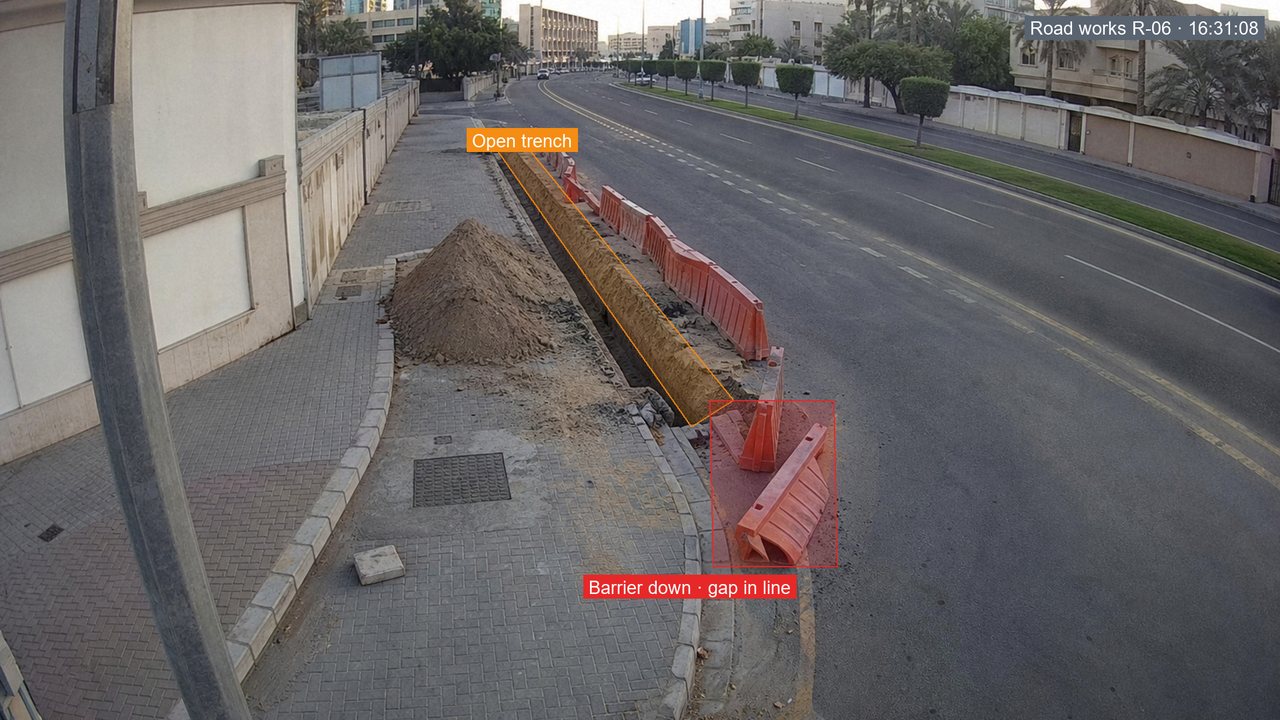
Barriers are down beside an open trench at road works R-06.
Questions about smart city video analytics
What can smart city video analytics detect?
It finds standing water, blocked drains, dumped waste, parked vehicles, fallen barriers and crowd levels. Bin points, roads and walls are compared with their last clear image.
Do we need new cameras?
Most cities start without new cameras. ZoneIntel runs on standard IP cameras. The footage review shows where a camera needs to move or be added.
Can it run in our own data centre?
ZoneIntel runs in the city's own data centre, with data kept in-country. Roadside servers keep working if a district link drops. They send the backlog when it returns.
How does it fit our city operations centre?
Cases, clips and status go to your operations platform and case systems by API. Cameras are read through your existing video system. Teams can also use the ZoneIntel dashboard.
Who installs and supports it?
A system integrator installs and supports ZoneIntel for the city. The ZoneIntel team supplies the software, the models and second-line support.
A case report from your own cameras
Pick one district and share a few hours of footage through a secure link. We send back the case list ZoneIntel would have raised, with owners and photos.